Back to the California Theatre to see the “other” cast, that is, the cast that did not perform on Thursday. The staging was the same as the one on Thursday; only the cast was (mostly) different:
Violetta: Rebecca Davis
Alfredo: Michael Dailey
Giorgio: Evan Brummel
Flora: Wendy Buzby
Baron Douphol: Isaiah Musik-Ayala
Gastone: Mete Tasin
Marquis D’Obigny: Bradley Kynard
Dr. Grenville: Silas Elash
Annina: Rebecca Krouner
Conductor: David Rohrbaugh
Stage Director: José Maria Condemi
Rebecca Davis sang with considerable force and purity of tone, but lacked some of the emotion heard on Thursday. Michael Dailey cut the final high note of his act 2 cabaletta short and avoided the pit that Thursday’s Alfredo had fallen into—perhaps that note is particularly treacherous and that’s why the cabaletta is often cut. Cheers to our tenors for at least trying it. Evan Brummel was adequate as Giorgio Germont, but lacked the gravitas heard earlier. The chorus and orchestra under the leadership of David Rohrbaugh were again superb. A beta.
Tuesday, February 21, 2012

Saturday, February 18, 2012
La Traviata, Opera San Jose, Feb. 16 2012
Almost exactly five years to the day since the previous production of La Traviata, it’s back—not surprising, given that (according to one measure) it’s one of the most popular works in today’s opera world. It was given in four acts, with two intermissions, and a “pause” between acts 3 and 4. The same basic set was used for all four acts: to the right we saw a wooden floor, rising gently from the front of the stage to the back, with a couple of wide steps down to the flat area to the left. At the back, a wall with a large window to the right; on the right side, a wall with three doors.
As the prelude concluded, the lights came up gradually on Violetta gazing at a large (six feet by twelve) portrait of herself, mounted on the wall to the left of the large window. Through the large window, we saw a partially-completed Eiffel Tower, the setting having been moved forward about 40 years from Verdi’s intended date of 1845, and almost 200 years from what the score says: “Paris and its environs, ca. 1700.” The left side of the stage was furnished with only a large round ottoman on which several people could sit. When the prelude was over and the party music began, the guests burst through all three doors, half the chorus telling the other half that they are late.
For the second act, we were moved to the little house in the country. The middle door has been covered over by a large stone fireplace with a gun rack on the audience side. Through the window we saw the shrubbery outside, and where Violetta’s portrait had hung there was now a large rack of dried herbs. On the flat portion of the stage there was a small table and a stool.
In the third act we were at Flora’s mansion, which looked a lot like Violetta’s, except that her portrait was gone and the large window incorporated an entryway. Through the window we could see a completed Eiffel Tower. To the left, a gambling table with chairs. To the right, covering the middle door, a very large poster of a charging bull.
For the fourth and final act, we were returned to Violetta’s mansion. Her portrait had fallen off the wall and was lying against the wall at an angle. On the left was Violetta’s sickbed, and a chair for Annina. The drapes over the window were initially closed, but when Violetta asked Annina to open them, she opened one side, and a very dim light entered. After all, it was winter in Paris, and the libretto said “seven o’clock” (in the morning).
Our cast:
Violetta: Jouvanca Jean Baptiste
Alfredo: Alexander Boyer
Giorgio: Torlef Borsting
Flora: Cathleen Candia
Douphol: Isaiah Musik-Ayala
Gastone: Justin Marsh
D’Obigny: Bradley Kynard
Dr. Grenville: Silas Elash
Annina: Tori Grayum
Conductor: David Rohrbaugh
Stage Director: José Maria Condemi
The orchestra played beautifully throughout; in particular, the overture was worth some goosebumps. It took the singers a while to warm up, though. The first act sounded as though the singers were keeping a lot in reserve for later in the evening. When Alexander Boyer entered at the beginning of act 2 and sang the cavatina “De’ miei bollenti spiriti” and started in on the cabaletta “O mio rimorso!” he sounded greatly improved. Unfortunately, his final high note came out as what could only be described as a croak. We felt so bad for him. Torlef Borsting, as Alfredo’s father Giorgio Germont, sang beautifully when he sang more loudly; his softer passages suffered in comparison. Jouvanca Jean-Baptiste sang Violetta well after the first act, but not outstandingly so. The chorus sang very well. The stage direction was quite fine. In particular, Baron Douphol’s challenge to the duel at the end of act 3 was very clear, although Isaiah Musik-Ayala may have gotten ahead of his cue—he stood there with his card in his upraised hand for what seemed an uncomfortably long time. Overall, an enjoyable evening in the theater; a beta.
Monday, February 13, 2012
Götterdämmerung, Metropolitan Opera HD Live, Feb. 11 2012
The Robert Lepage/La Machine Ring cycle concluded with a superb performance of Götterdämmerung. The first question to present itself, as it has for each of the previous operas in the cycle, is “What did they do with La Machine?” In case you are joining late, “La Machine” is an array of 24 2-foot wide planks, something like 24 closely-packed see-saws; each plank can rotate, independently of the others, through a full 360°. The performance takes place in front of, on, and occasionally underneath La Machine. The entire construction weighs 45 tons, so it is onstage all the time.
In contrast to Das Rheingold and Die Walküre, the first two operas of the cycle in which La Machine was distracting in its excessive amount of motion, in Götterdämmerung it tended to take a shape and then stay put while images were projected onto it. Because it is so easy to move the planks, and so easy to show new projections, a lot more happened with the “scenery” than in more traditional production—so much that it’s easy to forget the details of each scene. But the following stand out in my memory as being particularly effective. In Siegfried’s Rhine Journey, all but the four center planks were held still, while the four gently tilted back and forth, with Siegfried holding the bridle of a full-sized mechanical horse—a very apt depiction of a boat (or raft) being buffeted by the waves. The Hall of the Gibichungs was nicely represented by a few widely-space blanks held in a vertical position to be the support columns, and the remainder tilted slightly above horizontal to be the ceiling. For Siegfried’s scene with the Rhinemaidens, he stood and sat on a set of planks held slightly below horizontal, while the Rhinemaidens cavorted on their planks at a much steeper angle. They would climb up the planks and sit in one spot (presumably aided by shoes and a sit-upon made with high-friction rubber), then turn to one side and slide back down to the stage. All the while, an image of a rushing river was projected on the Rhinemaiden’s planks, with two large rocks jutting out of the river. The Rhinemaidens would sit on the rocks, presumably so that images of rushing water would not be projected on their faces.
Siegfried’s death scene was the occasion for a great use of the projections. In the transition from the scene with the Rhinemaidens to the scene with the hunting party, the planks and the rushing river stayed as they were. But after Hagen killed Siegfried, Gunther held his body, and got blood on his hands. He climbed up the left bank of the “river” and washed his hands in it. A little bit of the river turned red ... and by the end of the scene, the entire river was stained red.
Although La Machine made for a very non-traditional production, the Immolation Scene was the most true to the stage directions that I have seen. They built a funeral pyre by stacking logs at 90° angles to each other, half a dozen layers high, laid the body on top of the pyre, and then burned it with red lights and stage fog. Not the conflagration (with real fire!) that Seattle Opera did many years ago, but far superior to the recent San Francisco production, where Siegfried’s body was unceremoniously dumped from a cart at the back of the stage, perhaps into the Rhine. And here, Brünnhilde mounted the mechanical horse, which was guided slowly next to the funeral pyre as the planks rotated to vertical to hide it—and to present a surface on which the Rhine overflowed and the world burned up. In the last several seconds, what we saw were the planks held vertical, but moving slowly back and forth to suggest the undulating Rhine, which was exactly how Das Rheingold had opened. Yes, the Ring is a cycle.
Our cast:
Brünnhilde: Deborah Voigt
Siegfried: Jay Hunter Morris
Hagen: Hans-Peter König
Gunther: Iain Paterson
Gutrune: Wendy Bryn Harmer
Waltraute: Waltraud Meier
Alberich: Eric Owens
Conductor: Fabio Luisi
Production: Robert Lepage
Last November in Siegfried, Jay Hunter Morris had been promoted from cover to performer, and triumphed in the role. It was very exciting to learn that he had been given the role of Siegfried in Götterdämmerung as well. While I can’t fault anything about his performance, it wasn’t the knock-your-socks-off kind of performance that he gave us in Siegfried, which I’m sure will be long remembered. Deborah Voigt did fine, but the winner in Götterdämmerung was Hans-Peter König, who displayed a magnificent bass voice, which his performances as Hunding in Die Walküre and Fafner in Siegfried had prepared me for. Iain Paterson sang a very strong Gunther, and Wendy Bryn Harmer made a fetching Gutrune. Eric Owens was his usual sonorous Alberich. Waltraud Meier (at 56) sang a fine Waltraute, although her Valkyrie costume didn’t fit her very well. Just short of an alpha—I want to see an encore performance if it is ever broadcast, but I really want to see a Siegfried encore.
Sunday, January 22, 2012
The Enchanted Island, Metropolitan Opera HD Live, Jan. 21 2012
An interesting project, this. Take Shakespeare’s play, The Tempest, about the Duke of Milan (Prospero), exiled to an island along with his daughter, Miranda. Mix in the two couples from Shakespeare’s A Midsummer Night’s Dream, who get shipwrecked on Prospero’s island and are subsequently paired up with the wrong lover through the misapplication of a magic potion. Create a major role for Sycorax, Caliban’s mother, who in The Tempest dies before the play opens. Find arias and dances from a number of Baroque operas by Handel, Vivaldi, Rameau, Leclair, Purcell, Campra, and Jean-Féry Rebel. Set the words of the libretto to that music. What do you get? A pasticcio (pastiche), a form that is described as “almost as old as opera itself.” My favorite example of the genre is something called The Savoyards, which the Lamplighters presented many years ago, telling the story of the collaboration of Gilbert and Sullivan using the music and often the words of Gilbert and Sullivan: “See how the fates their gifts allot—G is happy but S is not.”
So The Enchanted Island works out to be the “world premiere” of three hours of Baroque music, complete with new sets and costumes of course. The set was an amalgam of the Baroque practice of painted flats and the thoroughly modern techniques of interactive, computer-generated video projections. The basic structure of the set was that of two columns connected by an arch overhead. Each column had a short (eight steps) curving staircase leading up to a door. The left column was Prospero’s: above the door were shelves full of books. The right column was Sycorax’s: it was engulfed by tree roots. The open space between the columns was used for any number of projections and drop-down flats. The budget for costumes must have been immense: an elaborate golden feathers (and angel-like wings) for Ariel, creature-from-the-black-lagoon costumes for Caliban and Sycorax, elaborate costumes with head-masks for the dancers, etc.
Our cast:
Ariel: Danielle de Niese
Miranda: Lisette Oropesa
Sycorax: Joyce DiDonato
Prospero: David Daniels
Ferdinand: Anthony Roth Costanzo
Neptune: Plácido Domingo
Caliban: Luca Pisaroni
Conductor: William Christie
Production: Phelim McDermott
Of these, the most impressive were Danielle de Niese and Luca Pisaroni. de Niese tossed off elaborate baroque showpiece arias with ease, and acted the part of the sprite to perfection. Pisaroni displayed a wondrous bass-baritone voice. Plácido Domingo was singing on this, his 71st birthday. While he may not be quite as impressive as he once was, it was still a delight to hear him. At the interview our hostess Deborah Voigt mentioned that Neptune was his 136th role, and Domingo noted that this was the first time he had portrayed a god. But ... how many times does a tenor get to portray even a king?
The major shortcoming of this performance was the libretto. On the macro scale, the idea of doing a mash-up of The Tempest and A Midsummer Night’s Dream is a reasonable one. On the micro level, that of the actual words to be sung, there were problems. While there was nothing as silly as “Please pass the salt” or “Who was that on the telephone?” or “I will have to give you a geography lesson,” the librettist was clearly no Shakespeare. And the libretto was littered with far too many rhymed couplets that were just lame. Worth seeing once but not twice. A beta.
Saturday, December 10, 2011
Faust, Metropolitan Opera HD Live, Dec. 10 2011
Once in a while there comes along an opera in an “updated” production that does not offend, but works. This Faust was one of those. Perhaps playing off of John Adams’s Dr. Atomic, producer Des McAnuff set the opera in the laboratory of Dr. Faust, a physicist with the Manhattan Project. The constant in every scene was a pair of industrial-grade steel balconies and railings and spiral staircase, one to the left and one to the right. In the center of the back wall was a huge opening, as tall as the Met stage permits, in back of which various images were projected. A small number of props were placed in the center of the stage for each scene.
In Act 1, the props included (large) models of Little Boy and Fat Man suspended in the air, and one of the projected images was of the Atomic Bomb Dome. There were a number of industrial-grade tables in Dr. Faust’s laboratory, covered by sheer white cloths; when Mephistopheles arrived, the cloths were whisked/blown away. At one point we saw Marguerite as a lab assistant working with a complex piece of laboratory equipment that looked something like a lathe.
For Act 2 the laboratory tables with equipment were removed and the crowd brought in other tables for the tavern scene. Respecting the libretto, Valentin did brandish his sword at Mephistopheles. Instead of making a cross of the pieces of the broken sword, a staging device that I have previously seen used to great effect, Valentin threatened Mephistopheles with the medallion that Marguerite had given him, and a few members of the chorus constructed a large “cross” by hoisting one table on its short side, with another table above it, and a third table positioned horizontally in front of the second to form the crossbar.
In Act 3 there were just a couple of low benches; Siebel put his bouquet on one of them and Faust placed the jewel box beneath the other one. There was also a foot-powered Singer sewing machine at which Marguerite worked.
Act 4 was most notable for presenting a Marguerite about 9 months pregnant; at the end of the church scene, she disappeared briefly in the middle of the chorus and then emerged no longer pregnant but holding a small bundle, which she promptly stuffed into the laboratory’s wash basin (the same wash basin from which Siebel had gotten his holy water in Act 3).
Act 5 opened with a scene that, in my experience, is even more rarely presented than the Wolf’s Crag scene in Lucia di Lammermoor—the Walpurgis Night scene. A number of ghouls with ghastly makeup were seated on both sides of a long table which held a Little Boy with its top hatch removed and its “entrails” spilling out onto the table. In the final scene, Marguerite was locked in a 10x10 steel jail cell, which Faust opened with the key that Mephistopheles has provided. When the chorus sang “She is saved!” she ascended to heaven by walking up four flights of industrial-grade steel stairs at the back of the stage, while Mephistopheles and Faust sank down through a trap door. At the very end, Faust reappeared, dressed again as the old man that he was at the beginning, and drank the beaker of poison that he had poured near the beginning of Act 1, then collapsed on the floor—as though the events of the opera had been a dream.
Our cast:
Faust: Jonas Kaufmann
Méphistophélès: René Pape
Marguerite: Marina Poplavskaya
Valentin: Russell Braun
Siébel: Michèle Losier
Conductor: Yannick Nézet-Séguin
Production: Des McAnuff
René Pape, with his luscious bass voice, made a commanding Mephistopheles, and seemed to get the most applause at curtain call time. Jonas Kaufmann was a superb Faust; he included a diminuendo at the end of Act 2 that I missed but my neighbors marveled at. Marina Poplavskaya’s Marguerite seemed a bit tentative. Russell Braun’s (Valentin) death scene was masterful, but the music gave no break for applause. The orchestra under Yannick Nézet-Séguin performed magnificently. The encore performance is Wednesday, Jan. 11; attend if you can. It’s not an alpha, but at least a very solid beta.
In Act 1, the props included (large) models of Little Boy and Fat Man suspended in the air, and one of the projected images was of the Atomic Bomb Dome. There were a number of industrial-grade tables in Dr. Faust’s laboratory, covered by sheer white cloths; when Mephistopheles arrived, the cloths were whisked/blown away. At one point we saw Marguerite as a lab assistant working with a complex piece of laboratory equipment that looked something like a lathe.
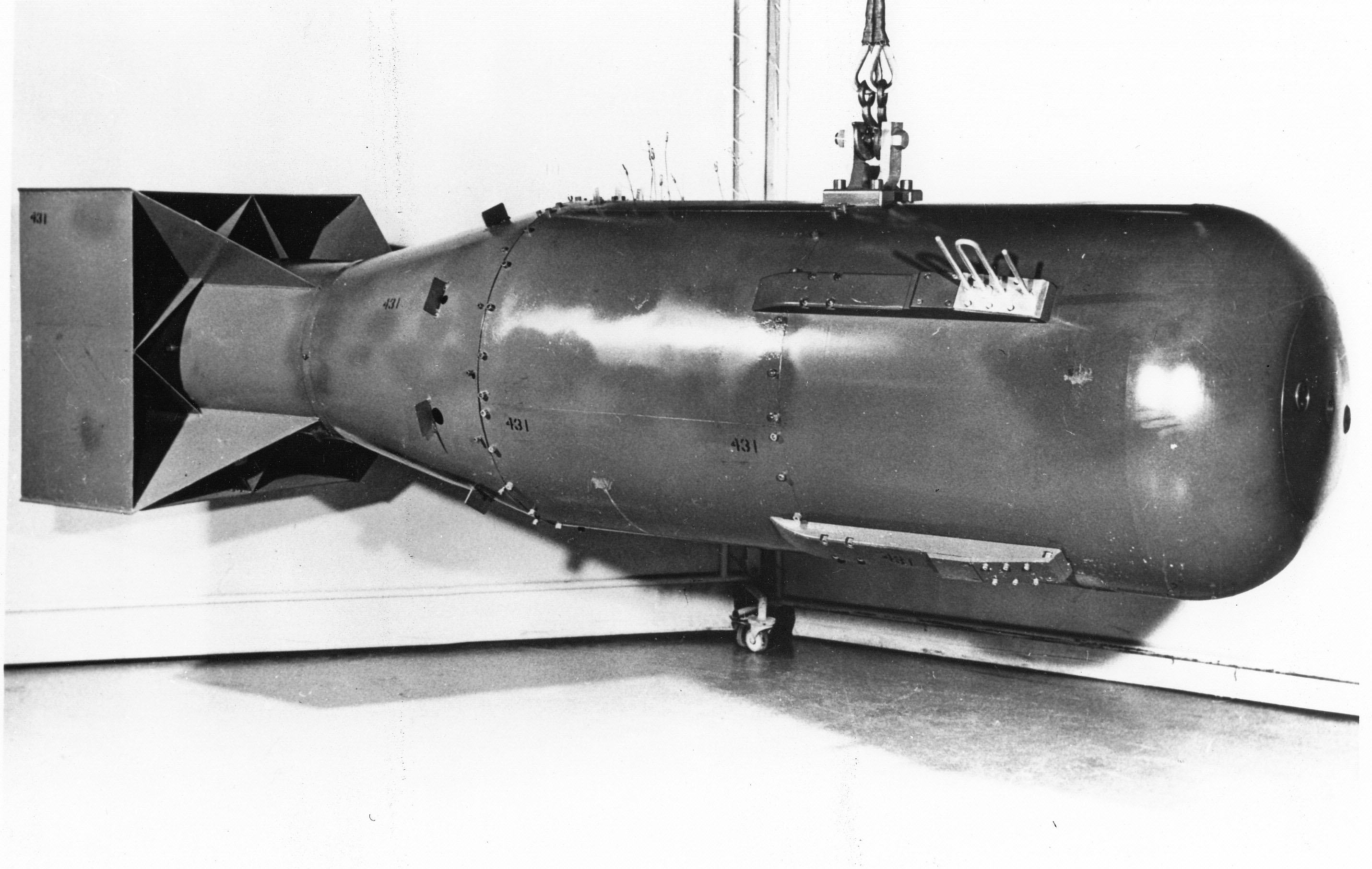
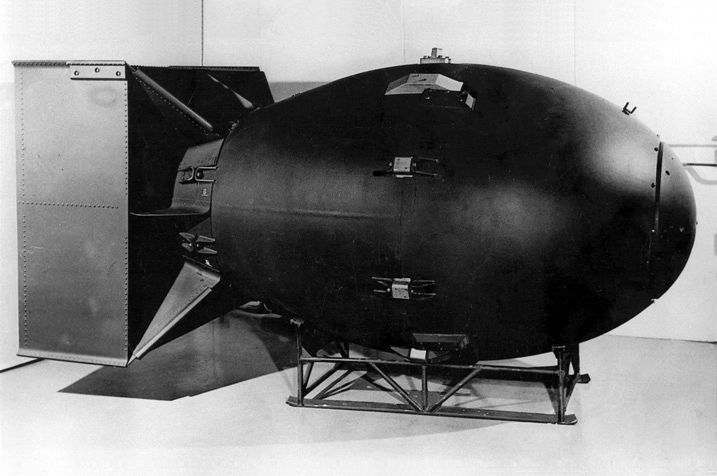
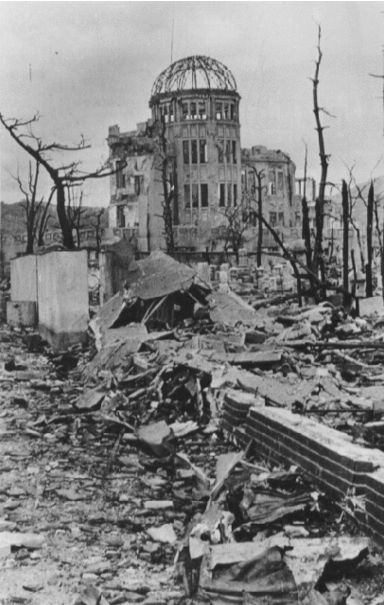
For Act 2 the laboratory tables with equipment were removed and the crowd brought in other tables for the tavern scene. Respecting the libretto, Valentin did brandish his sword at Mephistopheles. Instead of making a cross of the pieces of the broken sword, a staging device that I have previously seen used to great effect, Valentin threatened Mephistopheles with the medallion that Marguerite had given him, and a few members of the chorus constructed a large “cross” by hoisting one table on its short side, with another table above it, and a third table positioned horizontally in front of the second to form the crossbar.
In Act 3 there were just a couple of low benches; Siebel put his bouquet on one of them and Faust placed the jewel box beneath the other one. There was also a foot-powered Singer sewing machine at which Marguerite worked.
Act 4 was most notable for presenting a Marguerite about 9 months pregnant; at the end of the church scene, she disappeared briefly in the middle of the chorus and then emerged no longer pregnant but holding a small bundle, which she promptly stuffed into the laboratory’s wash basin (the same wash basin from which Siebel had gotten his holy water in Act 3).
Act 5 opened with a scene that, in my experience, is even more rarely presented than the Wolf’s Crag scene in Lucia di Lammermoor—the Walpurgis Night scene. A number of ghouls with ghastly makeup were seated on both sides of a long table which held a Little Boy with its top hatch removed and its “entrails” spilling out onto the table. In the final scene, Marguerite was locked in a 10x10 steel jail cell, which Faust opened with the key that Mephistopheles has provided. When the chorus sang “She is saved!” she ascended to heaven by walking up four flights of industrial-grade steel stairs at the back of the stage, while Mephistopheles and Faust sank down through a trap door. At the very end, Faust reappeared, dressed again as the old man that he was at the beginning, and drank the beaker of poison that he had poured near the beginning of Act 1, then collapsed on the floor—as though the events of the opera had been a dream.
Our cast:
Faust: Jonas Kaufmann
Méphistophélès: René Pape
Marguerite: Marina Poplavskaya
Valentin: Russell Braun
Siébel: Michèle Losier
Conductor: Yannick Nézet-Séguin
Production: Des McAnuff
René Pape, with his luscious bass voice, made a commanding Mephistopheles, and seemed to get the most applause at curtain call time. Jonas Kaufmann was a superb Faust; he included a diminuendo at the end of Act 2 that I missed but my neighbors marveled at. Marina Poplavskaya’s Marguerite seemed a bit tentative. Russell Braun’s (Valentin) death scene was masterful, but the music gave no break for applause. The orchestra under Yannick Nézet-Séguin performed magnificently. The encore performance is Wednesday, Jan. 11; attend if you can. It’s not an alpha, but at least a very solid beta.
Saturday, December 3, 2011
Rodelinda, Metropolitan Opera HD Live, Dec. 3 2011
Rodelinda is the oldest opera yet presented in the Met HD series. Iphegenie in Tauride dates back to 1779, but Rodelinda, regina de’ Longobardi (to give it its full name) was premiered in 1725. Some of us noted resemblances between Rodelinda and The Messiah; the latter was composed in 1741 and first performed in 1742. Self-borrowings were not uncommon at that time.
The first act opened in a large, spare bedroom, with Rodelinda chained by one arm to her very simple bed. She was soon released by Grimoaldo, usurper of her husband’s throne. Thereafter the scenes shifted between a courtyard and a library. The most prominent feature of the courtyard was a large obelisk; to the right there was a small stable for four to six horses. The library was magnificent: two stories, with balcony, and with hundreds of large books behind glass doors. Even with Met HD close-up camera work, it was not apparent that the books had titles. My guess is that each book was actually a papier-mâché block painted with a large stripe for the title area and thinner stripes for the binding cords. Nevertheless it was very effective. For one scene the courtyard was raised out of sight so that we could see the prison in which Bertarido (the deposed king) was being incarcerated.
Our cast:
Rodelinda: Renée Fleming
Eduige: Stephanie Blythe
Bertarido: Andreas Scholl (countertenor)
Unulfo: Iestyn Davies (countertenor)
Grimoaldo: Joseph Kaiser
Garibaldo: Shenyang
Conductor: Harry Bicket
Production: Stephen Wadsworth
Renée Fleming sang well; I certainly liked her performance here better than her Lucrezia Borgia, recently seen at San Francisco Opera. But I preferred Stephanie Blythe’s singing, if not her acting—certain advantages accrue to a person of Fleming’s size rather than Blythe’s. Of the two countertenors, I much preferred the Unulfo of Iestyn Davies. (Interesting sidelight: in the intermission interview, both countertenors demonstrated their normal speaking voices; Andreas Scholl could pitch his speaking voice rather low. Neither had missed puberty.) Shenyang contributed a mellifluous bass voice in his relatively minor role.
The authenticity and detail of Stephen Wadsworth’s sets were entirely in keeping with the “authenticity” and detail of his sets for Der Ring des Nibelungen in Seattle, currently my gold standard for Ring productions. (Start making plans for the 2013 Seattle Ring!) The music was pleasant, though not particularly memorable or cathartic. A beta.
Friday, November 25, 2011
La Voix Humaine and Pagliacci, Opera San Jose, Nov. 22 2011
Two days later, back to San Jose to see the other cast perform this unusual double bill. The sets and action were the same as in the first cast. I was very much looking forward to seeing this cast because A Woman would be sung by Suzan Hanson, who had sung Tatiana in the company’s 1989 (?) production of Eugene Onegin and had turned in one of the most impressive performances I have seen on the operatic stage.
Our cast:
A woman: Suzan Hanson
Conductor: Andrew Whitfield
Director: Layna Chianakas
This evening, the acting wasn’t up to the standard set by Betany Coffland two days before. Hanson sang well enough, but didn’t convey the intensity of feeling that Coffland had. A bit better than a gamma.
Our cast for Pagliacci:
Tonio: Jason Detweiler
Canio: Travis Jones
Nedda: Jouvanca Jean-Baptiste
Beppe: Michael Dailey
Silvio: Krassen Karagizov
Conductor: Andrew Whitfield
Director: Cynthia Stokes
This performance failed to reach the relatively low bar set by the performance of two days prior. Travis Jones appeared to be out of his element as Canio. Again, no magic, no intensity. A gamma.
Subscribe to:
Posts (Atom)